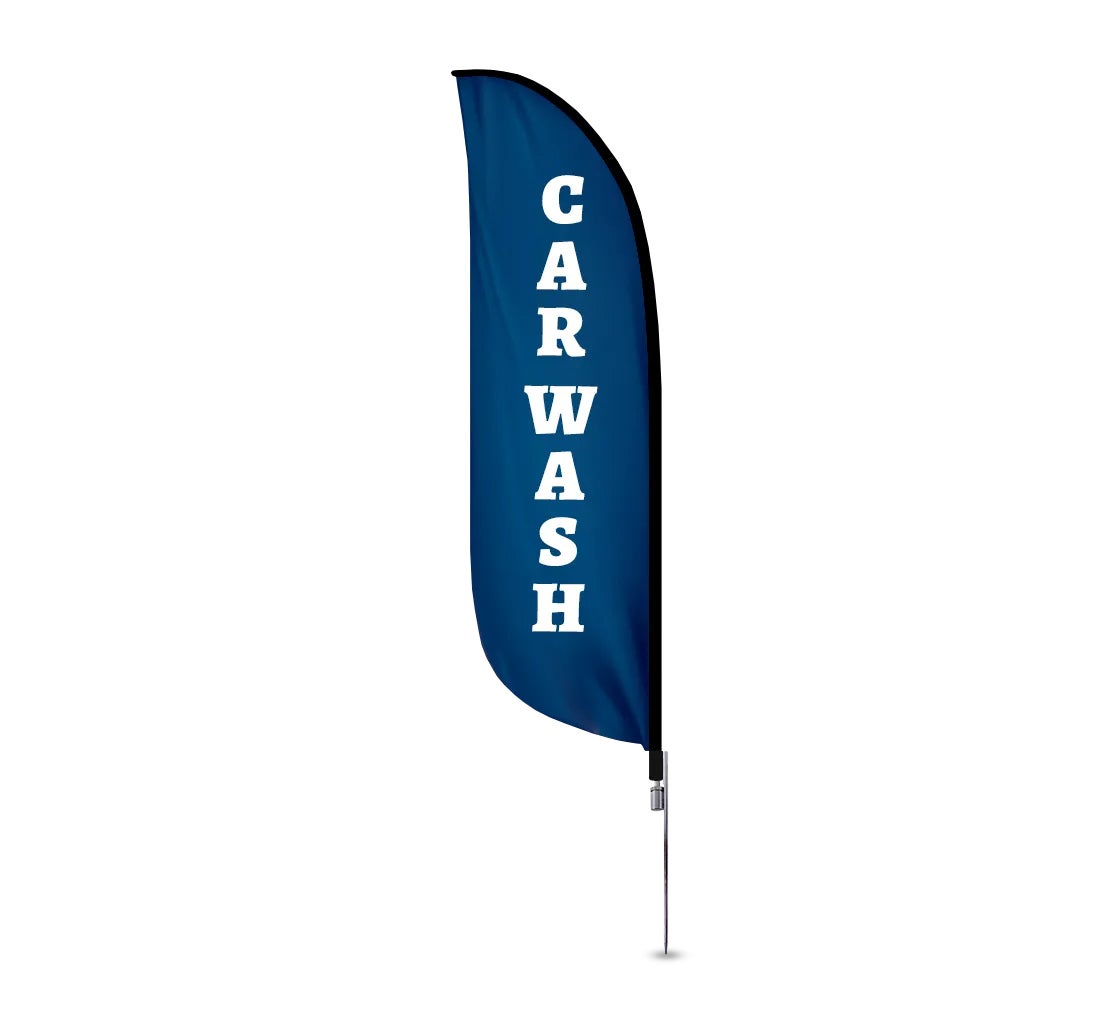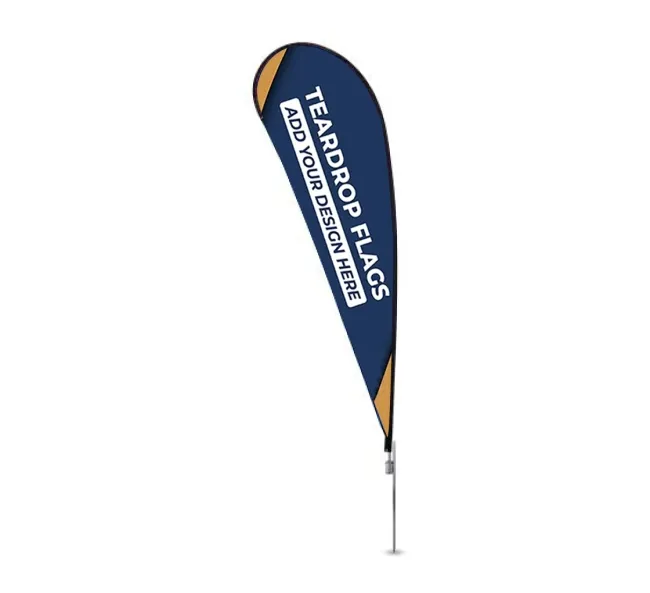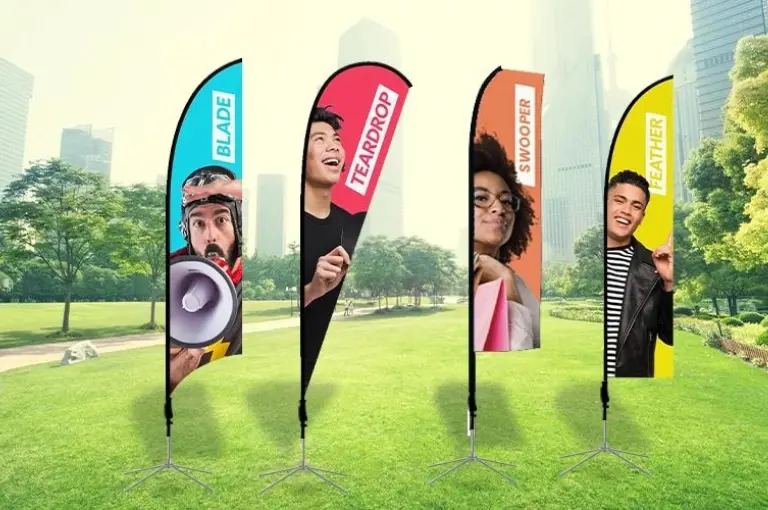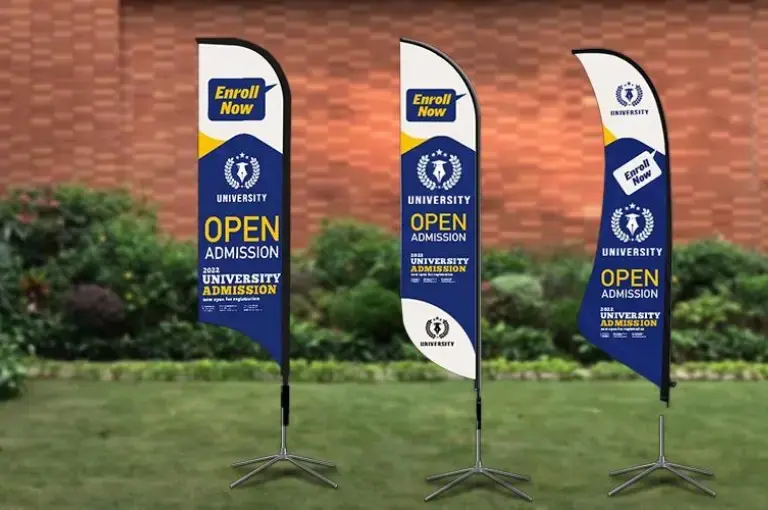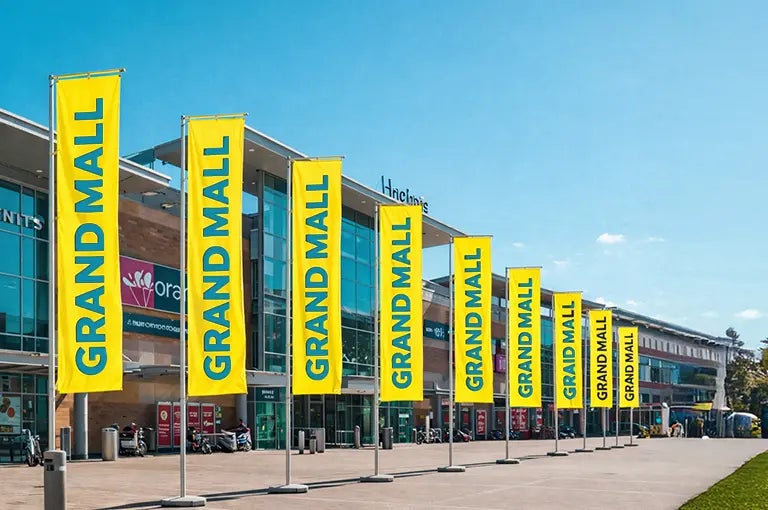


You have probably seen them outside cafes, car dealerships, gyms, real estate sites, roadside sales, school events, and weekend pop-ups. Tall, bright, moving in the wind, and impossible to ignore from a distance. Feather flags have quietly become one of the most common outdoor display tools around.
And that raises a fair question.
Are they actually good, or do they just look good?
Because there is a difference. Many advertising products appear impressive for a short period, but they often fail to deliver once placed outdoors. A smart buyer wants to know whether the flag will last, whether people will notice it, whether it works in bad weather, and whether it is worth the money in the first place.
That is exactly what this blog is about.
If you are considering feather flags for advertising, it helps to look past the surface. Yes, they are eye-catching. Yes, they move nicely in the wind. Yes, they can make a business look more visible from the street. But the real question is whether they actually perform in the places businesses use them most.
The short answer is yes; they can be very effective. But this only applies when you choose the right size, base, material, and message.
So let us break down what buyers should actually know before ordering.
Why feather flags get attention so easily

One of the main reasons advertising feather flags works is movement.
Most outdoor signage stays still. Boards stand in place. Posters sit flat. Hoardings rely on sheer scale. Feather flags do something different. They move, and that movement naturally catches the eye. People notice shifting shapes faster than static ones, especially when they are driving past, walking by, or scanning a busy street.
That is a big part of what makes them useful. They are not trying to do the same job as a shop board or a banner stretched across a wall. They are there to pull attention from a distance and create visibility quickly.
That is also why they are often used as outdoor advertising flags rather than deep-information tools. They are brilliant at saying “Look here.” They are less suited to explaining a complicated offer in small text.
So, in terms of grabbing attention, feather flags already have a strong natural advantage.
Are feather flags good for advertising?
This is the question most buyers really care about: are feather flags good for advertising?
In most cases, yes.
They are especially useful for businesses that need local visibility. Think retail stores, salons, restaurants, fitness studios, car showrooms, schools, event organizers, real estate agents, local fairs, and roadside promotions. These are all situations where the main goal is to be seen clearly and quickly by people already moving through the area.
That is where feather flags do their best work.
They work especially well when the goal is to announce something quickly. Whether that is a sale, launch, open house, grand opening, limited-time offer, event, pop-up, or seasonal promotion. They may not replace every other form of signage, but they are very good at creating the first spark of attention.
And for a lot of businesses, that first spark is exactly what is missing.
Are feather flags effective in real-world use?
A slightly different question is, are feather flags effective once they are outside and dealing with traffic, weather, distance, and distraction?
Again, the answer is yes, but with one condition: the design must match the format.
This is where some people get disappointed. They buy the product, then overload it with too much text, a tiny logo, small contact details, and a message no one can read from the road. At that point, the problem is not the flag. The problem is the design.
A feather flag works best when the message is simple and bold. One strong word. A short offer. A brand name. A category. “Open.” “Sale.” “Now Open.” “Fresh Coffee.” “Event Today.” That kind of language works because it can be processed quickly.
If you treat a feather flag like a brochure, it will fail. If you treat it like an attention tool, it usually performs very well.
Why businesses keep coming back to them
There is a reason so many businesses reorder them.
Feather flags are visible, relatively easy to set up, and versatile enough to work in front of shops, outside events, near roadsides, at exhibitions, and even on pavements when the space allows. They also help make a business look more active. A storefront with movement outside it naturally feels more alive than one without it.
That matters more than people think.
A lot of physical advertising is about perception. If the business looks busy, visible, and present, it already feels more established. That is one of the underrated strengths of feather flags marketing. It does not just push a message. It changes the energy around the location.
How long do feather flags last outdoors?
This is one of the smartest buyer questions: how long do feather flags last outdoors?
The honest answer is that it depends on the use, weather, print quality, and how well they are looked after.
In normal outdoor use, a well-made feather flag can last several months to a year or more, especially if it is brought in during extreme weather and not left out to take constant damage. In harsher conditions, the lifespan can be shortened. Strong UV exposure, constant wind, heavy rain, or poor storage will wear the fabric down faster.
The pole system matters, too. A cheap setup may loosen or weaken much earlier than a sturdier one. So, buyers should think about the full system, not just the printed fabric.
If you use the flag every day in a tough outdoor setting, expect it to wear over time. That is normal. But for many businesses, even a few strong months of visibility can make the investment worthwhile.
What makes a good feather flag design

A good feather flag is not trying to say anything.
This is probably the most important thing a buyer should know.
The format is tall and narrow, which means it naturally suits short, stacked messages better than long, detailed ones. Large text wins. Strong contrast wins. Clear branding wins. Overexplaining loses.
If the aim is high-visibility advertising, then simplicity matters more than cleverness. People usually see these flags while moving, walking, driving, passing, and scanning. The message must land fast.
The best designs usually include:
- one short main message
- a readable typeface
- strong color contrast
- a logo that is visible without overpowering the message
- minimal clutter
That is why this format works so well for sales, events, launches, and local service promotion.
Are they better than banners?
Not necessarily better. Just different.
Banner displays stretched across a wall give you more room for information, while feather flags are better at movement and long-distance visibility. Wall banners feel more fixed and stable; feather flags feel more dynamic and portable. One format can explain more, while the other is usually faster at catching attention.
That is why smart businesses often use them together rather than choosing one over the other. One draws the eye; the other tells the fuller story.
Who should buy them?
Feather flags make the most sense for buyers who want visibility near a physical location.
That includes:
- retail shops
- cafés and restaurants
- gyms and studios
- event organizers
- schools and colleges
- real estate promotions
- local service businesses
- car dealerships
- market stalls
- seasonal campaigns
They are also useful for brands that already use custom flags and want another format that feels more energetic and promotional.
If the main challenge is “people pass by but do not notice us enough,” feather flags are often a very sensible solution.
Feather Flag – Yes Please!
So, are feather flags worth it?
In most cases, yes.
They are one of the simplest ways to add movement, visibility, and street-level attention to a business or event. They work well outdoors, they are easy to recognize from a distance, and they help create the kind of local presence many brands still need. Their strength is not in saying everything. Their strength is in getting noticed.
That is why they keep showing up outside shops, events, fairs, roadsides, forecourts, and local promotions. Because when used properly, they still work.
The key is to buy them with the right expectations. Keep the design simple. Choose the correct size. Match the base to the location. Treat them like attention tools, not text-heavy information boards.
Do that, and feather flags usually prove themselves very quickly.