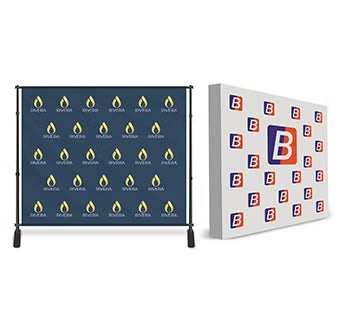


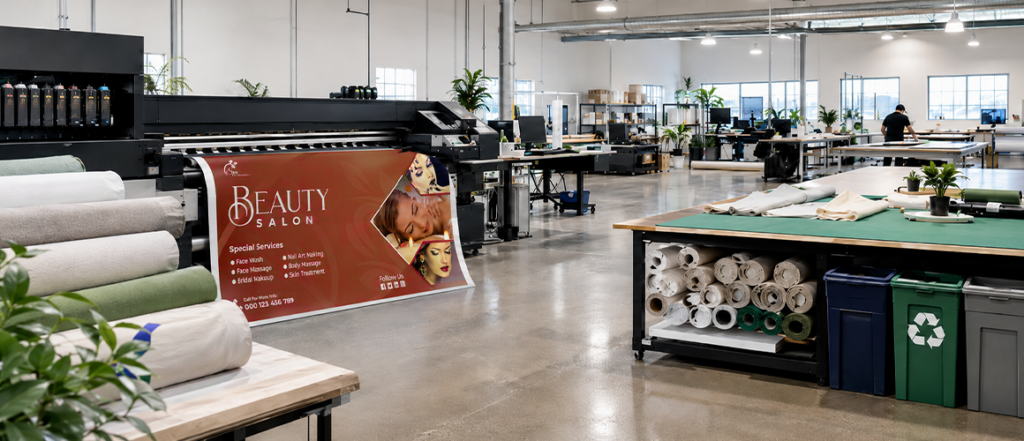
When you look at a vibrant, crisp custom banner hanging at a trade show or a storefront, your eyes immediately naturally go to the bold colors, the clean typography, and the message it carries. It serves its purpose beautifully: it grabs attention, builds brand recognition and drives engagement.
But what if the most impactful part of that promotional signage is the part you can’t see?
Behind every premium display stand and custom banner lies a complex web of engineering choices. In the modern print industry, the real innovation happens long before a drop of ink meets the fabric. From raw material choices to smarter packaging solutions, it is in reality, decisions like these that help completely reshape how banners are made sustainably.
Let’s lift the curtain and take a behind-the-scenes look at the invisible, sustainable production design choices that power responsible manufacturing today.
1. The Shift to PVC-Free Alternatives: For decades, the global standard for heavy-duty outdoor banners was traditional PVC (polyvinyl chloride). It was tough and weather-resistant, but it left behind a heavy environmental footprint. The first crucial decision in creating truly sustainable signage solutions starts right at the source: changing the material matrix.
By engineering high-performing, PVC-Free Flex Banners, modern banner printing services are proving that you do not have to give up on the structural integrity to protect the planet. These eco-friendly banners deliver a professional aesthetic on a uniform white surface, allowing full-color graphics to pop with massive visual flair.
The expansion into alternative material portfolios runs deep across essential marketing display products:
- PVC-Free Tent Canopies: Providing weather-resilient shelter for outdoor branding without relying on harmful polymers.
- PVC-Free Banner Stands: Reworking classic hardware, such as retractable banners, into eco-conscious profiles that are fully quality-approved.
- Natural Fiber Alternatives: Incorporating heavy-duty Duck Canvas (100% cotton) and soft textiles into the production lineup to provide natural alternatives for sophisticated indoor branding.
2. Recycled Fabrics and Verified Supply Chains:

A sustainable claim is only as strong as the verifiable data backing it up. True environmental responsibility requires an airtight, certified chain of custody. This means analyzing not just where a product ends up, but precisely how it is born.
The integration of advanced recycled materials; such as Recycled Polyester Fabric and Recycled Tent Canopies, relies heavily on strict adherence to international standard compliance. When these materials are certified by bodies like the Global Recycled Standard (GRS), and meet comprehensive safety frameworks like REACH and FR (Flame Retardant) specifications, it guarantees that every square inch of fabric has been diverted from waste streams and processed with low environmental impact.
Furthermore, moving toward a responsible supply chain means looking at the factories themselves. Operational excellence is maintained when manufacturing facilities align with rigorous frameworks, ensuring that:
- Processes are backed by ISO 9001:2015 certification for quality management systems.
- Material suppliers carry globally recognized sustainability badges, including OEKO-TEX, GRS and GOTS (Global Organic Textile Standard).
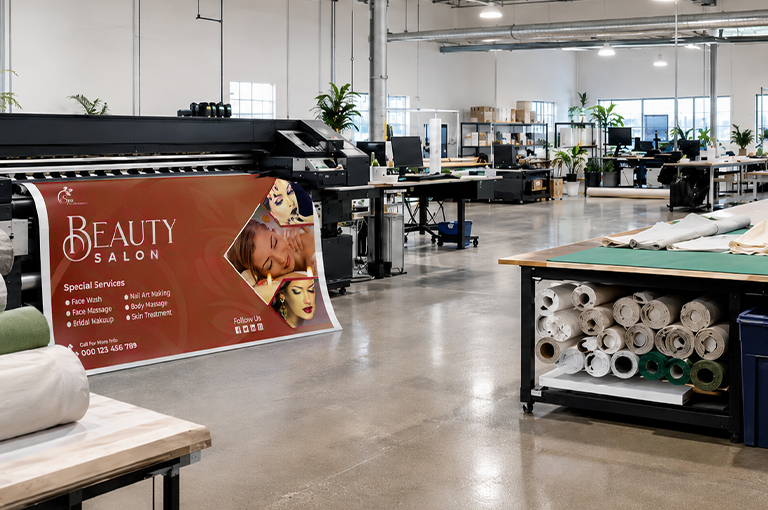
3. Eco-Conscious Printing and Finishing: Once the sustainable materials are selected, the next unseen milestone takes place under the high-tech printheads. Traditional print methods often run into heavy chemical consumption, massive water waste and high energy usage. The evolution toward eco-conscious printing solves all three hurdles at once.
Modern eco-conscious production facilities utilize high-resolution UV printing technology (operating at a crisp 600 to 720 DPI). This method utilizes specialized inks that cure instantly under ultraviolet lights. The process ensures zero water waste enters the local ecosystem, and it eliminates the need for intensive gas-fired drying tunnels.
Even the finishing floor is getting a major technical upgrade. Standard manufacturing operations have historically consumed vast amounts of electricity. By replacing traditional machinery with energy-efficient sewing machines powered by direct-drive servo motors, facilities can significantly lower electricity consumption on the production floor while maximizing operational efficiency.
4. Smarter Packaging Initiatives:
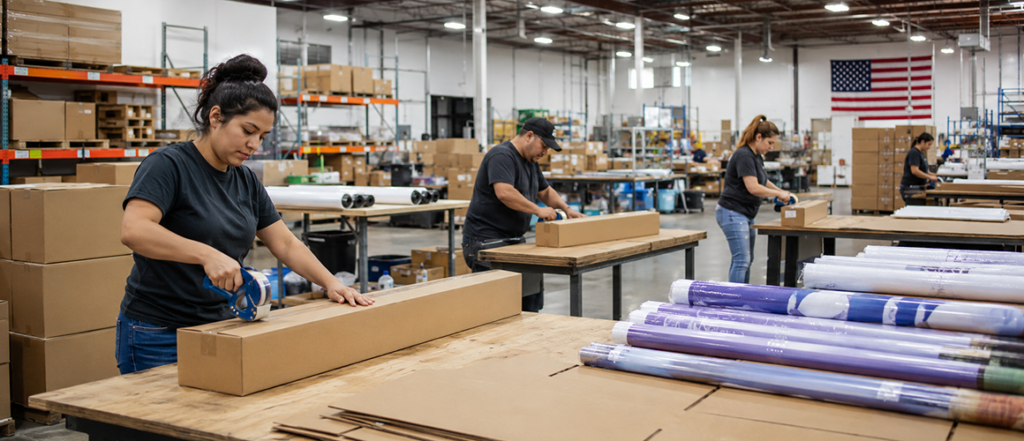
The sustainability journey doesn’t stop once a custom banner is perfectly printed and stitched. In fact, one of the most critical decisions customers never see involves how that display is packed, preserved and shipped across the globe.
A truly comprehensive approach to waste reduction requires smarter packaging initiatives designed to completely minimize material consumption:
- Oxo-Biodegradable Plastic Bags: Replacing traditional single-use plastic wrap with advanced oxo-biodegradable alternatives ensures that the protective barrier keeping signage solutions pristine during transit won’t sit in a landfill for centuries.
- Box Size Optimization: Using data-driven design to custom-fit boxes to product dimensions eliminates unnecessary space. By minimizing box sizes, manufacturers drastically reduce excess cardboard consumption and structural packaging waste, ensuring optimal material efficiency.
5. Industrial Eco-Infrastructure – Green Plant Operations: The ultimate baseline of a sustainable product is the physical facility where it is manufactured. True environmental stewardship means building an ecosystem that actively rejuvenates its immediate surroundings.
Here’s a glimpse of behind the scenes of sustainable production that’s quietly transforming into clean, low-impact facilities through major infrastructure updates:
- Solar Panel Installations: Transitioning factory rooftops into clean energy hubs significantly offsets standard electrical grid dependence, actively slashing the carbon footprint of every banner produced.
- Groundwater Recharge Wells: Industrial operations must protect local natural resources. Implementing fully operational groundwater recharge wells allows facilities to capture and redirect rainwater back into the local water table, helping preserve regional aquifers.
- Circular Waste Reutilization: By systematically tracking, sorting and upgrading waste management practices, excess fabric off-cuts and raw production scraps are actively upcycled and re-manufactured into new accessories rather than being discarded.
Continuous Improvement Through Practical Action
The next time you see high-quality custom signage solutions, remember that its true value lies in the balance between outward visual performance and inward ecological integrity.
True sustainability isn’t achieved through sweeping overnight pronouncements or corporate fluff; it’s earned through consistent, incremental steps on the manufacturing floor. By expanding PVC-free alternatives, optimizing packaging profiles, using certified recycled fibers and updating factory energy infrastructure, responsible manufacturers are proving that premium marketing visibility can coexist beautifully with an unyielding commitment to the planet.